
This post contains affiliate links.
On Finger Paint Family, discover practical, low-stress ways to handle sibling arguments calmly and help your children negotiate compromises without playing full-time referee.
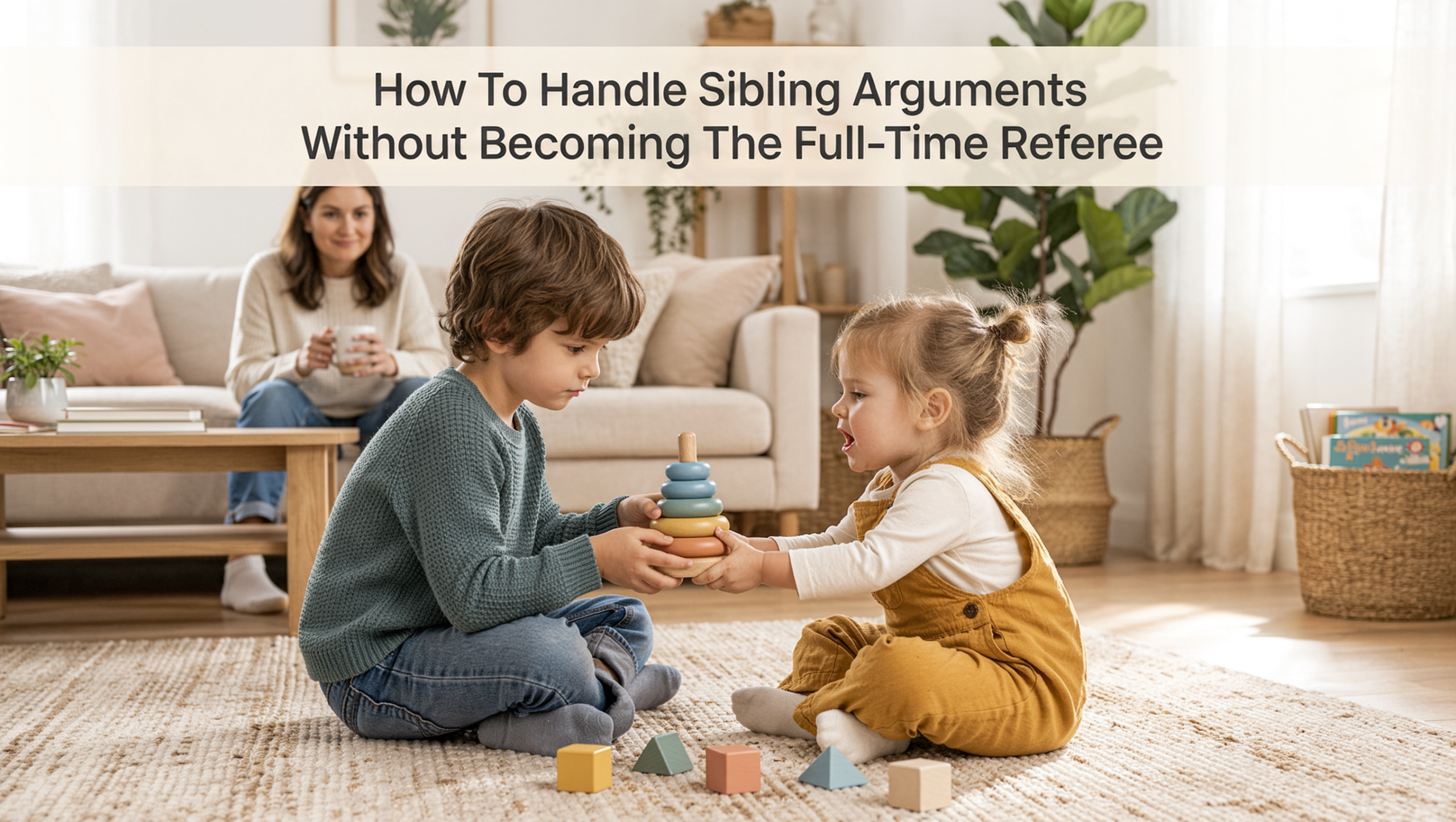
Parents can step out of the exhausting role of full-time referee by acting as calm sportscasters rather than courtroom judges. Instead of rushing into the living room to investigate who grabbed the blue Lego brick first, adults should pause, validate both children’s frustration neutrally, and hand the responsibility of finding a workable compromise straight back to the kids. When parents refuse to take sides or hand down verdicts, children quickly realise that louder complaints will not earn them an adult ally, forcing them to build real-world negotiation skills on their own.
Why Playing Judge Backfires Every Time
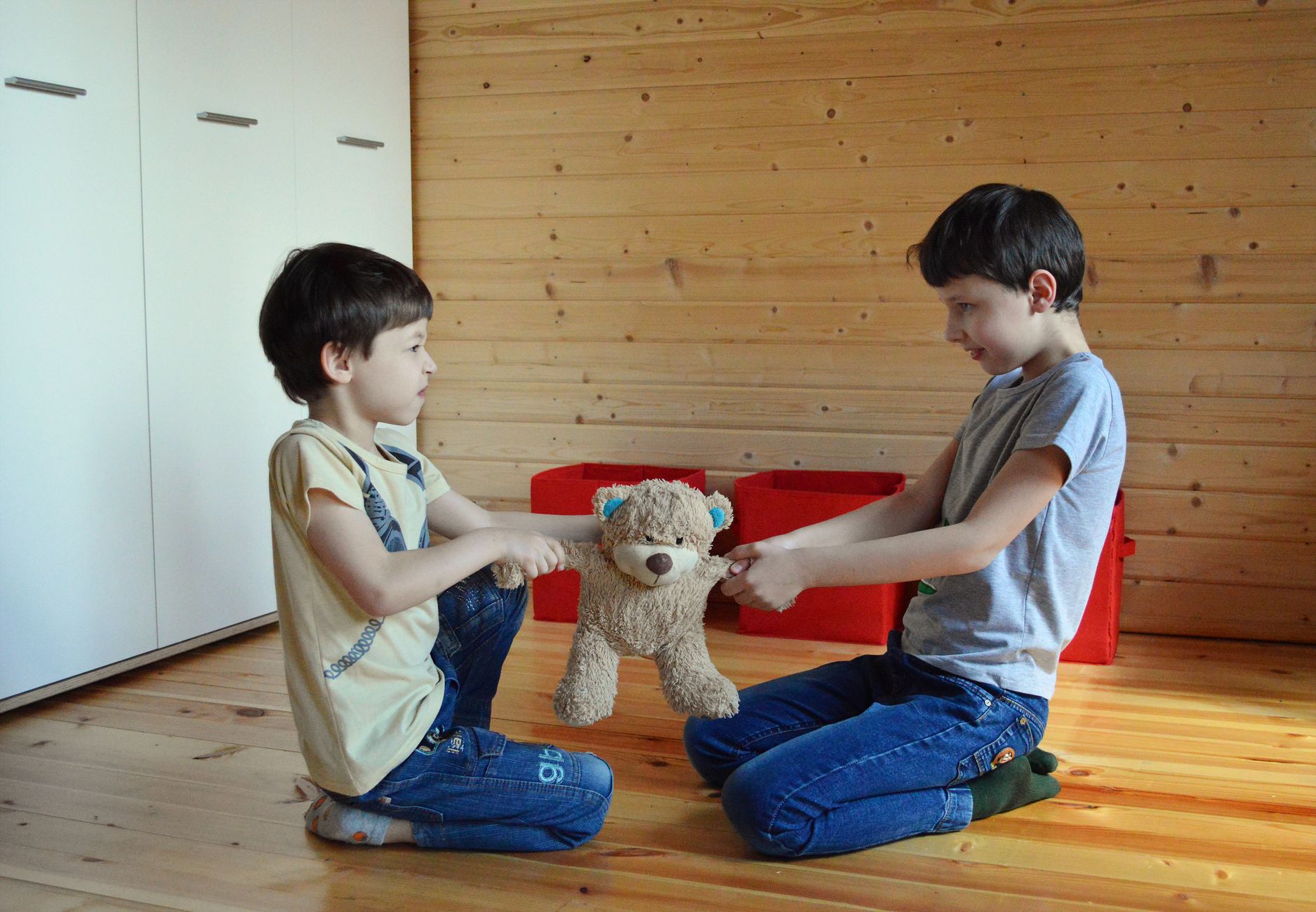
Stepping in to determine who started a squabble feels like the fair thing to do, yet it almost always makes household noise worse. Children rarely present an objective timeline of events, meaning any parental investigation immediately turns into a noisy courtroom drama where each child exaggerates the other’s offences to win sympathy. Even when an adult spots the exact moment one child snatched a toy, issuing a verdict creates a clear winner and a resentful loser. The child who loses the ruling feels misunderstood and plots revenge for ten minutes later, while the winner learns that running to Mum or Dad is the fastest way to defeat a brother or sister.
Rushing to rescue children from every minor disagreement also robs them of vital social practice. Home is the safest possible laboratory for learning how to share space, handle disappointment, and stand up for oneself without throwing a cushion across the room. If an adult constantly steps in to smooth over every bumpy interaction, kids reach secondary school without knowing how to resolve basic peer friction independently.
The Sportscaster Method in Action
Shifting from judge to sportscaster changes the emotional temperature of a room within seconds. When shouting erupts over a board game or the front seat of the car, walk over slowly and describe the situation aloud without blaming either party. A calm observation such as, “It sounds like two people want the exact same controller right now, and both of you are feeling pretty annoyed,” takes the wind out of the argument’s sails. Children often escalate their volume simply to make sure an adult notices their distress, so neutral acknowledgement removes their primary reason for yelling.
Once both children feel heard, state the boundary clearly and walk away. Tell them they have five minutes to figure out a fair plan, or the disputed item will take a quiet break on top of the fridge until after dinner. Keeping the tone light and unbothered signals complete confidence in their ability to sort things out. Most siblings will grumble for thirty seconds before inventing a surprisingly creative rotation system, simply because keeping the toy matters more than winning the argument.

Setting Boundaries When Emotions Boil Over
Of course, stepping back does not mean ignoring unsafe behaviour or letting one child steamroll the other. Physical aggression, name-calling, and destructive behaviour require an immediate, matter-of-fact stop. Parents can intervene firmly without launching into a twenty-minute lecture about kindness by separating the children briefly to let their nervous systems cool down.
A short sensory reset works wonders when tempers fray. Sending one child to grab a cold glass of water while the other sits on the sofa with a favourite book gives flooded brains time to switch back from fight-or-flight mode into rational thinking. Negotiation is impossible while adrenaline is pumping, so save any problem-solving conversations for once everyone is breathing normally again.
Preventing Flashpoints Before They Start
Many recurring sibling battles trace back to predictable environmental triggers rather than genuine hostility. Hunger, tiredness, and prolonged boredom are the ultimate catalysts for petty arguments over who looked at whom the wrong way. Offering a protein-rich snack during the late afternoon slump or breaking up a rainy Sunday with twenty minutes of outdoor puddle jumping prevents half the squabbles before they begin.
Fairness traps also fuel unnecessary rivalry. Parents often try to keep peace by buying identical toys or measuring portions down to the millimetre, yet strict equality actually trains children to keep a mental scoreboard. Focusing on individual needs instead of identical treatment teaches kids that fairness means everyone gets what they need to thrive, not that every moment looks exactly the same. Protecting ten minutes of uninterrupted one-on-one time with each child every few days further reduces the underlying competition for parental attention that drives so much sibling friction.

Teaching Kids the Language of Compromise
Younger children especially struggle to negotiate because they lack the vocabulary to express what they want without grabbing or shouting. Coaching them through simple phrases during calm moments equips them for future clashes. Practising sentences like, “Can I have a turn when the timer goes off?” or “I am still using this, but you can have it next,” gives toddlers and primary-aged children concrete tools to use when frustration hits.
Using a simple kitchen timer or visual sand timer removes personal bias from turn-taking entirely. When the buzzer beeps, the timer is the boss, not Mum or Dad. Over time, children begin grabbing the timer themselves before an argument even starts, turning a chaotic daily headache into a quiet routine that runs without adult supervision.


Author

judieannrose@live.co.uk
Related posts

20 Adorable Baby’s First Christmas Gifts They’ll Treasure Forever (Personalized Keepsakes Make #7 Extra Special!)
You will find 20 ideas that range from cozy clothing and bedtime items to personalized baby gifts made for display.
Read out all
100 Christmas Party Ideas For Children
Planning a Christmas party for children can feel overwhelming when you are trying to keep young guests entertained, happy, and within your...
Read out all
20 Christmas Gifts For Sporty Kids That’ll Get Them Off The Couch And Moving! (Save This Winning List!)
This list of Christmas gifts for sporty kids was made for parents, grandparents, and relatives who want more than another screen-based toy.
Read out all
15 Genius Family Christmas Budget Ideas That Keep The Magic Alive Without Draining Your Bank Account!
You may care about keeping Christmas special for your children while also paying rent, handling regular bills, and saving for future needs.
Read out all
Thirdy’s Tiny Adventures Offers Gentle Screen Time That Helps Toddlers Think, Move, And Speak
Thirdy’s Tiny Adventures is a gentle, family-focused YouTube series created by Filipino creator V, designed specifically to turn screen time into an...
Read out all
16 Easy Christmas Baking Ideas For Kids That Look Almost Too Cute To Eat (#9 Is A Cookie-Decorating Winner!)
These Christmas baking ideas for kids help you turn a free afternoon into a sweet family memory.
Read out all


